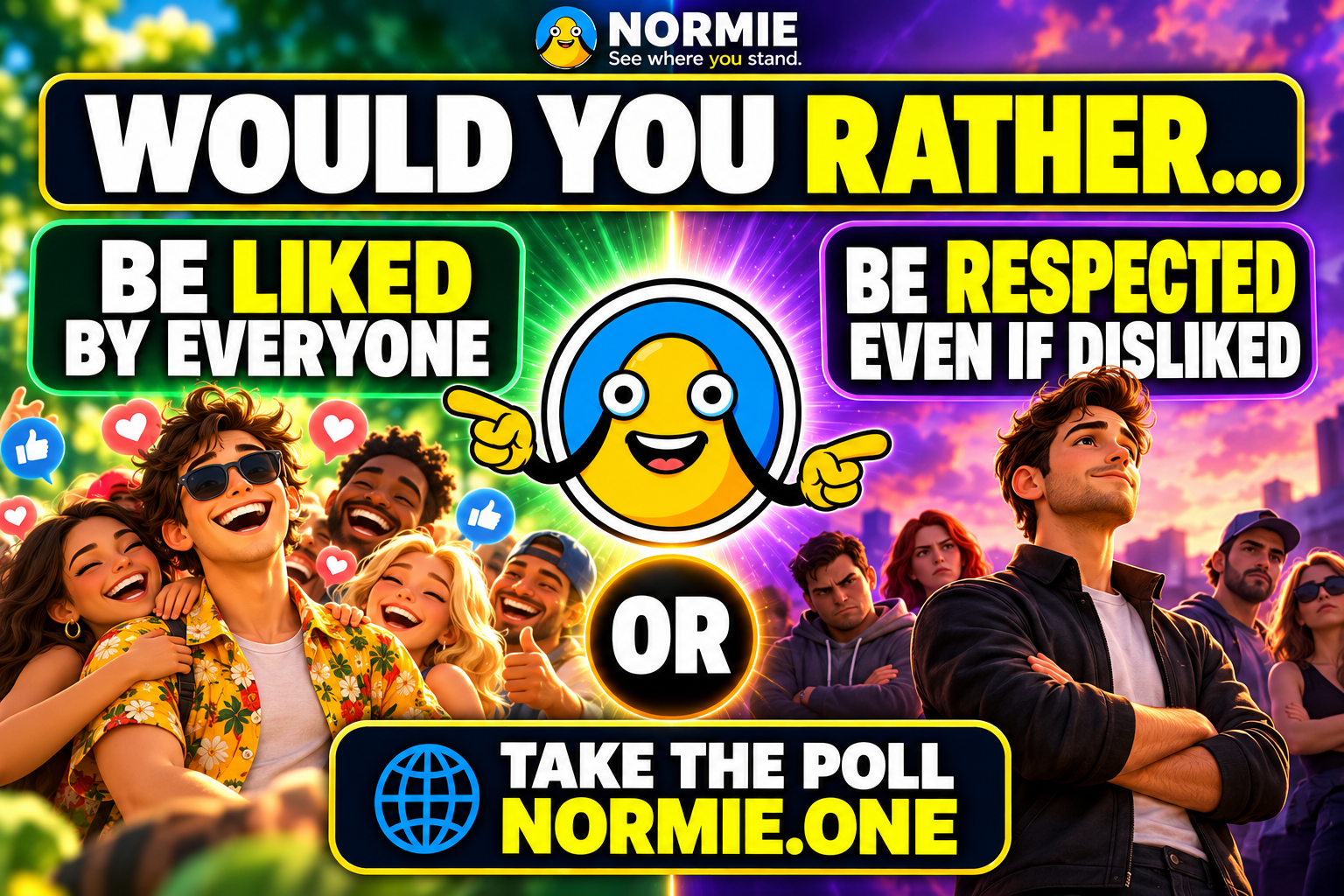
Would You Rather Be Liked by Everyone—or Respected Even If Disliked?
You leave a conversation knowing you said what everyone wanted to hear. Nobody argued. Everyone seemed happy.
Except you.
Maybe you agreed to something you didn’t want to do. Maybe you laughed at a comment that bothered you. Maybe you kept a useful opinion to yourself because disagreeing felt uncomfortable.
Now consider the opposite: you speak honestly, set a boundary, or make an unpopular decision. Some people dislike it. Yet you feel comfortable standing behind what you said.
Would you rather be liked by everyone—or respected even if disliked?
The choice gets interesting when you ask whose approval you’re trying to earn—and what it costs.
Take the Poll

The case for being liked
Being liked can make everyday life easier. People welcome you into conversations, include you in plans, and feel comfortable asking for your help.
There’s nothing shallow about wanting that. Warmth, humor, generosity, and consideration are valuable qualities. A person who makes others feel welcome contributes something meaningful.
The difficulty begins when being liked becomes a requirement for every decision.
Imagine a friend asks for another favor when you’re already exhausted. Saying yes might keep the moment pleasant. But if you repeatedly agree while feeling resentful, the friendship becomes less honest.
Being liked feels good. Having to be liked can become exhausting.
The case for being respected
Respect can grow when people see consistency between your words and actions. You keep your promises. You admit mistakes. You say no when necessary.
A manager who applies a fair rule may disappoint someone. A friend who raises a difficult concern may create an uncomfortable evening. Neither reaction automatically means they made the wrong choice.
But choosing respect has its own trap: assuming that being disliked proves you’re right.
It doesn’t. Someone can be unpopular because they’re principled—or because they’re dismissive, unreliable, or unkind. “I just tell it like it is” doesn’t excuse treating people badly.
The useful question is whether your position deserves respect, even from someone who disagrees.
Whose opinion matters?
“Everyone” is a huge audience. It includes people who know your character, people who barely know you, and people whose expectations you could never satisfy.
Try narrowing the question:
Do you want approval from strangers or trust from close friends?
Would you rather impress a room or be dependable when someone needs you?
Are you protecting a relationship—or avoiding a few minutes of discomfort?
You might discover that you don’t need universal approval. You need a few important relationships where honesty is welcome.
Try one small act of honest kindness
The next time you feel pressure to agree, pause before answering.
You could say, “I see it differently,” “I can’t take that on this week,” or “I care about you, but I don’t think that’s a good idea.”
You can give an honest answer with care. How you deliver it matters, even when you can’t control how it’s received.
Take the Normie poll: Would you rather be liked by everyone—or respected even if disliked? Visit Normie and explore the question.
Before you choose, consider this: Would your answer change if the person who disliked you was someone you loved?