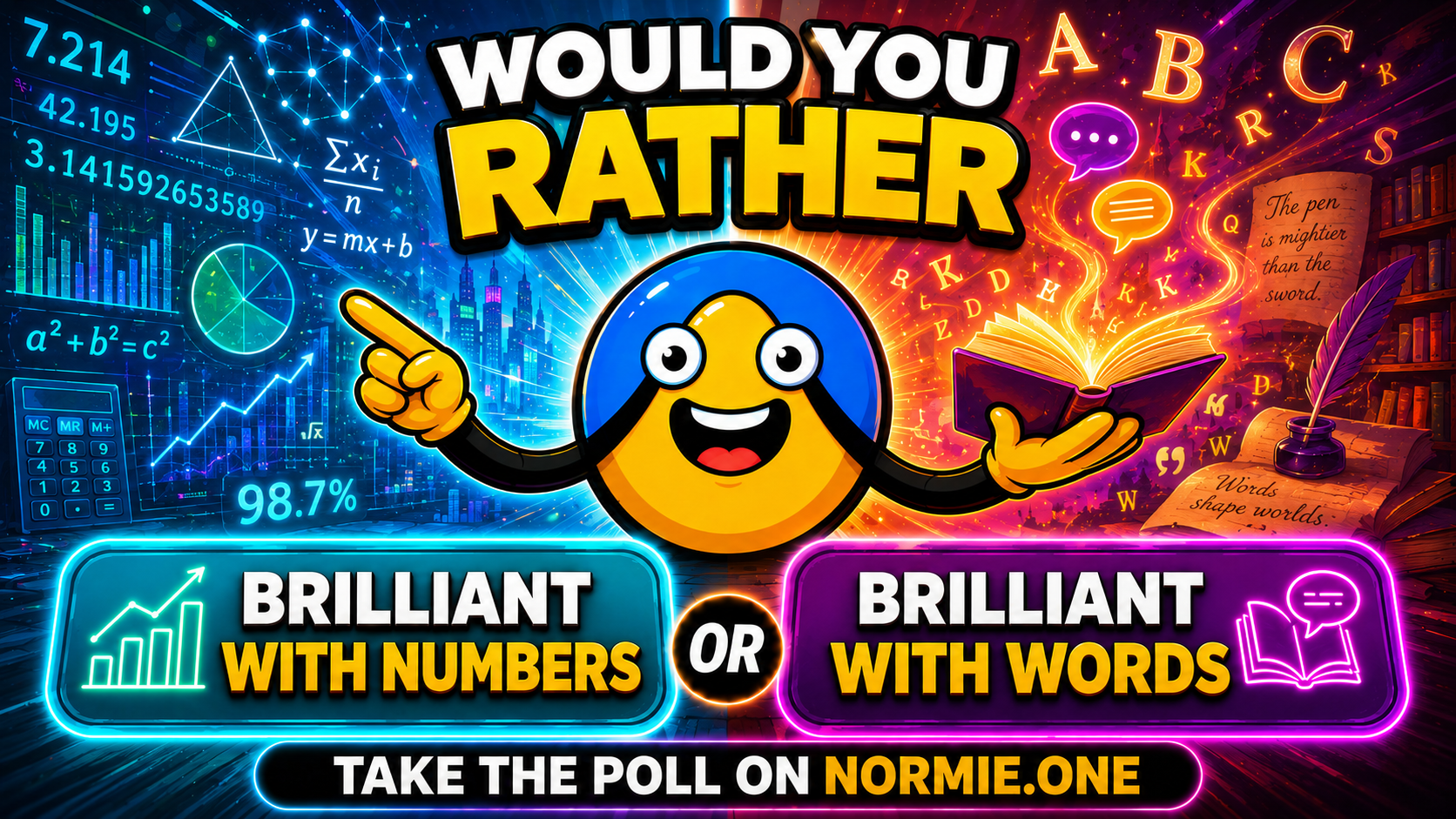
Would You Rather Be Brilliant With Numbers… or Brilliant With Words?
Would you rather master patterns, calculations, and probabilities—or language, storytelling, and persuasion?
Would you rather master patterns, calculations, and probabilities—or language, storytelling, and persuasion?
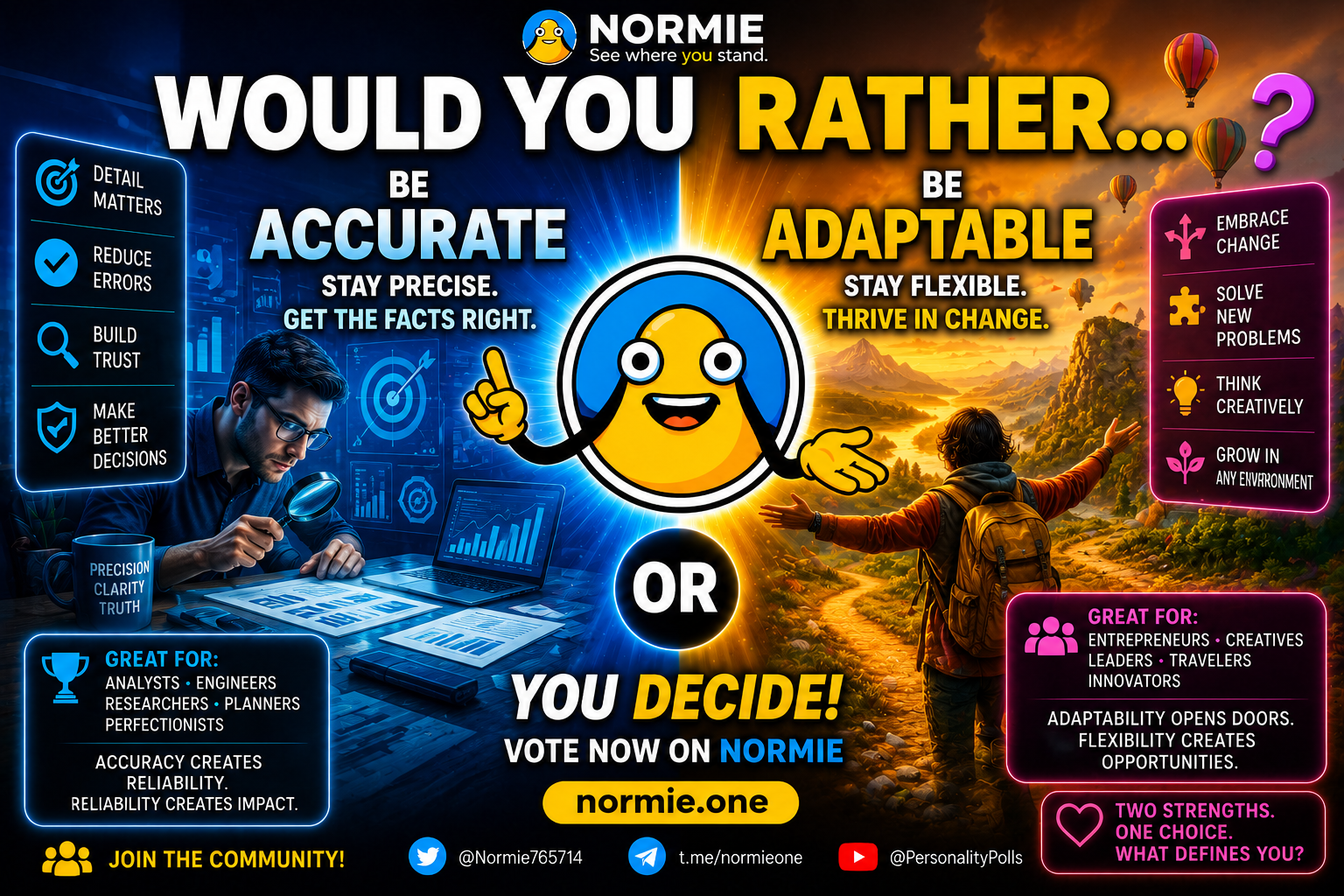
Would you rather be accurate or adaptable? This question reveals how you respond to uncertainty, pressure, and change. Accuracy builds trust through precision and reliability, while adaptability creates resilience in a world that never stops moving. The strongest people know when to be exact—and when to evolve.
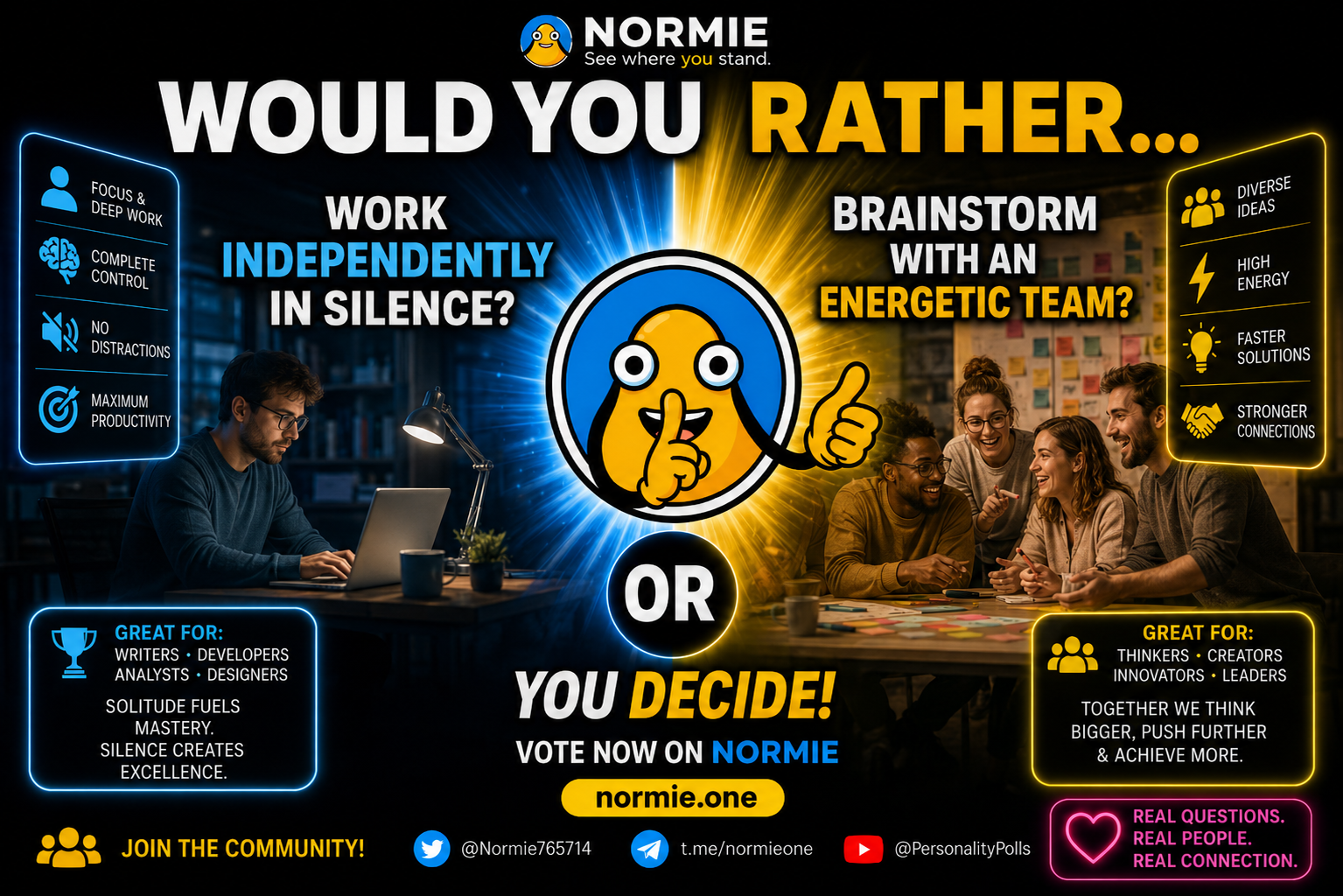
Do your best ideas emerge in quiet focus or through energetic collaboration? This thought-provoking question explores how you think, create, and solve problems. Some people thrive in solitude, using deep concentration to develop original ideas. Others gain energy from brainstorming, where conversation sparks creativity and innovation. Discover what your choice reveals about your personality, work style, leadership potential, and the environments where you're most likely to succeed.
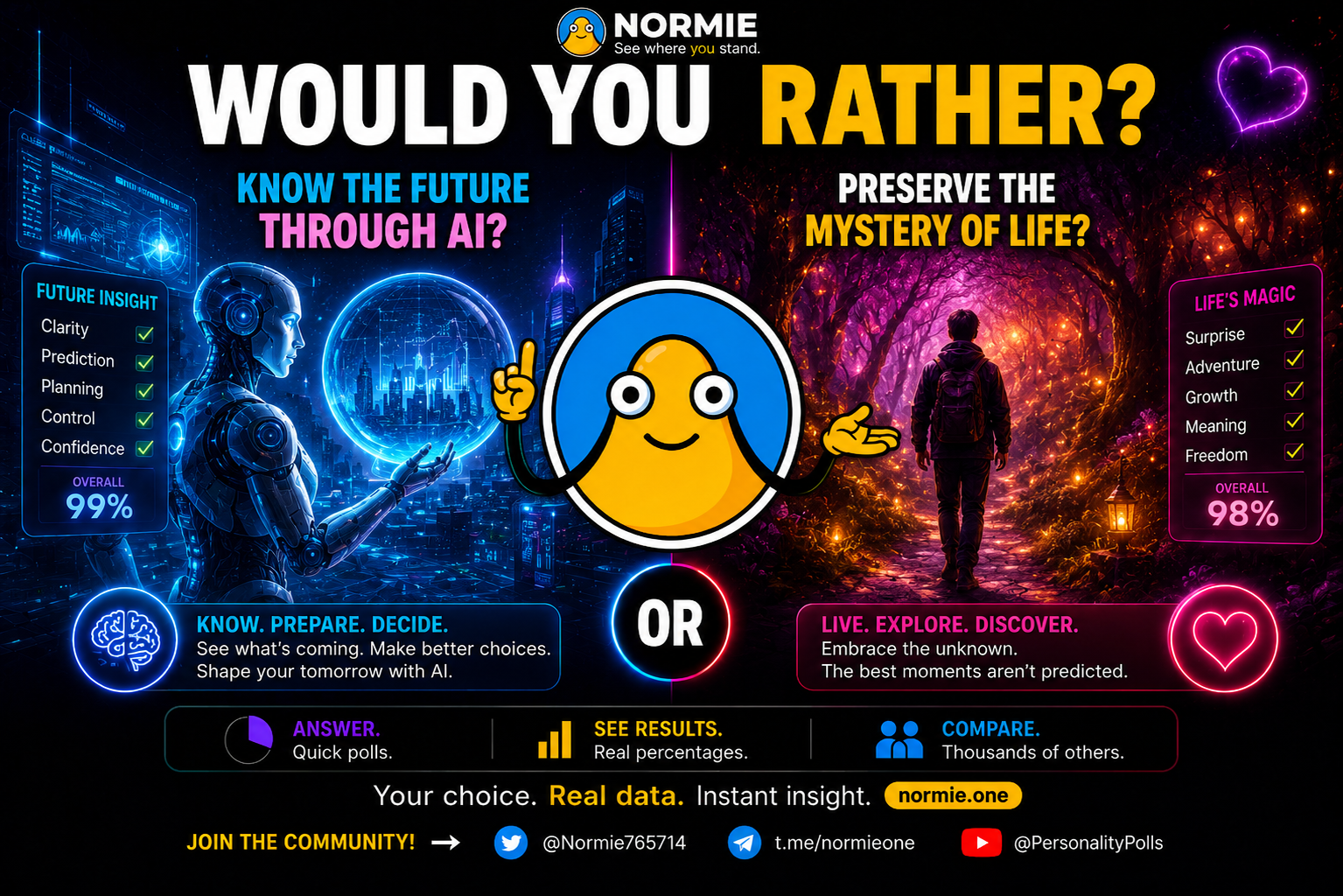
As artificial intelligence becomes increasingly capable of predicting our behavior, choices, and outcomes, a fascinating question emerges: would you rather know the future through AI or preserve the mystery of life? One path offers clarity, confidence, and optimization. The other preserves wonder, surprise, adventure, and the unpredictable moments that often define our lives. As AI grows more powerful, humanity may need to decide how much uncertainty we're willing to trade for certainty—and whether the greatest gift in life is knowing what's next or discovering it along the way.
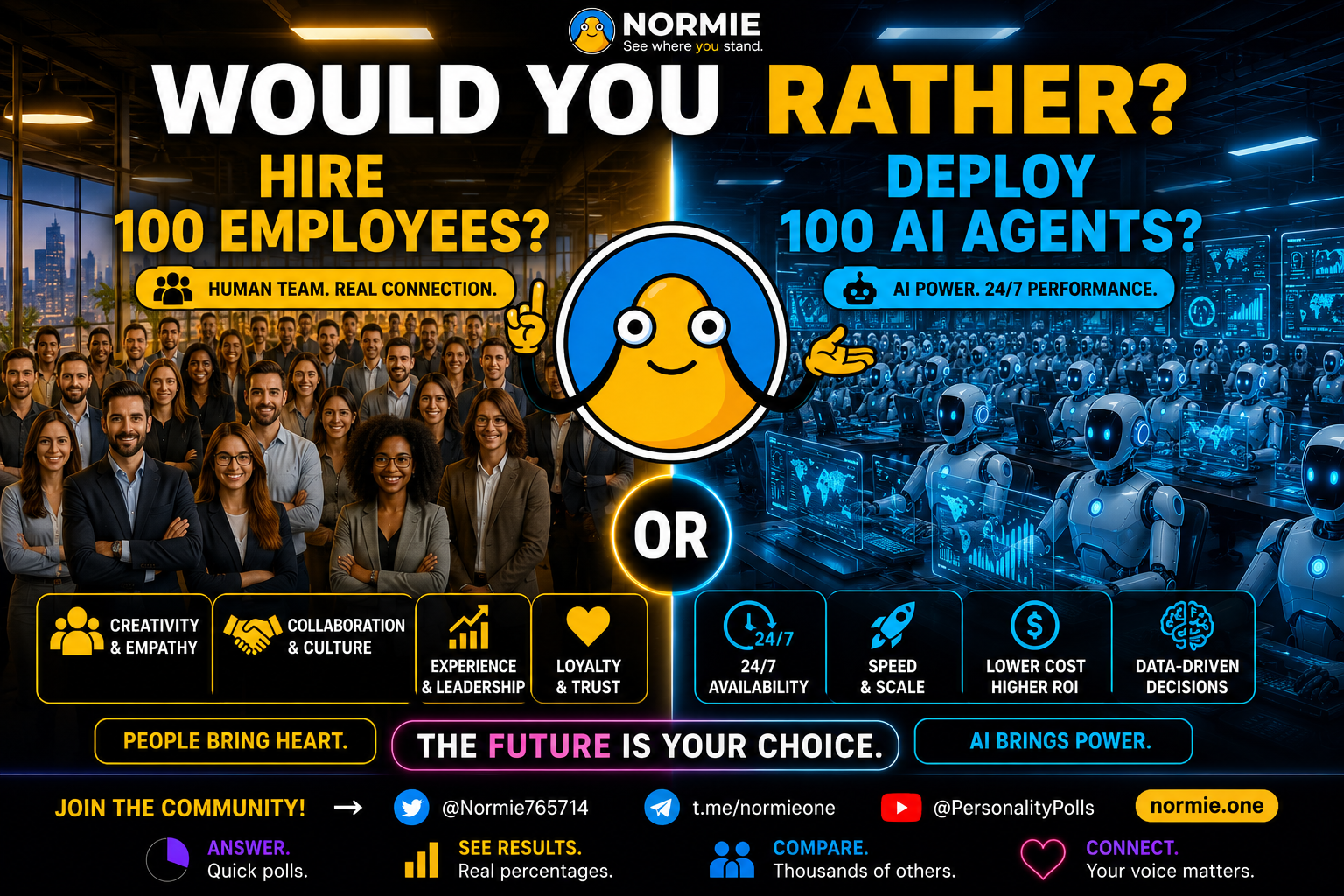
As AI agents become more powerful and capable, businesses face a fascinating question: would you rather hire 100 employees or deploy 100 AI agents? Humans bring creativity, empathy, leadership, and culture, while AI offers speed, scale, efficiency, and 24/7 performance. The future may not belong to one or the other—but to organizations that learn how to combine the strengths of both. What would you choose? Visit Normie and join the debate.
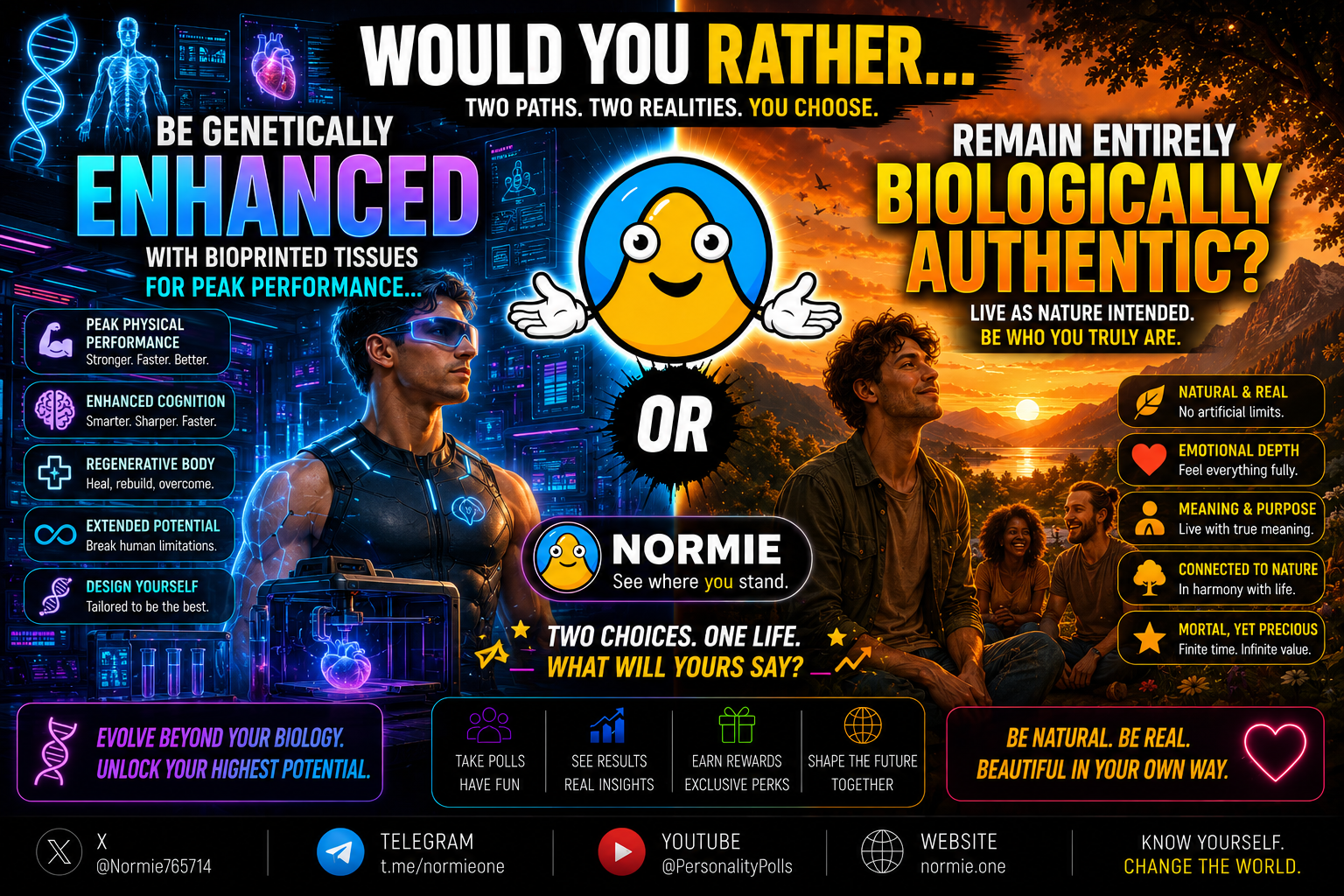
As biotechnology, genetic engineering, and bioprinting push the boundaries of human potential, society may soon face a profound choice: enhance ourselves beyond nature's limits or remain authentically human. This thought-provoking question explores identity, evolution, meaning, and what we may gain—or lose—when technology gives us the power to redesign humanity itself.
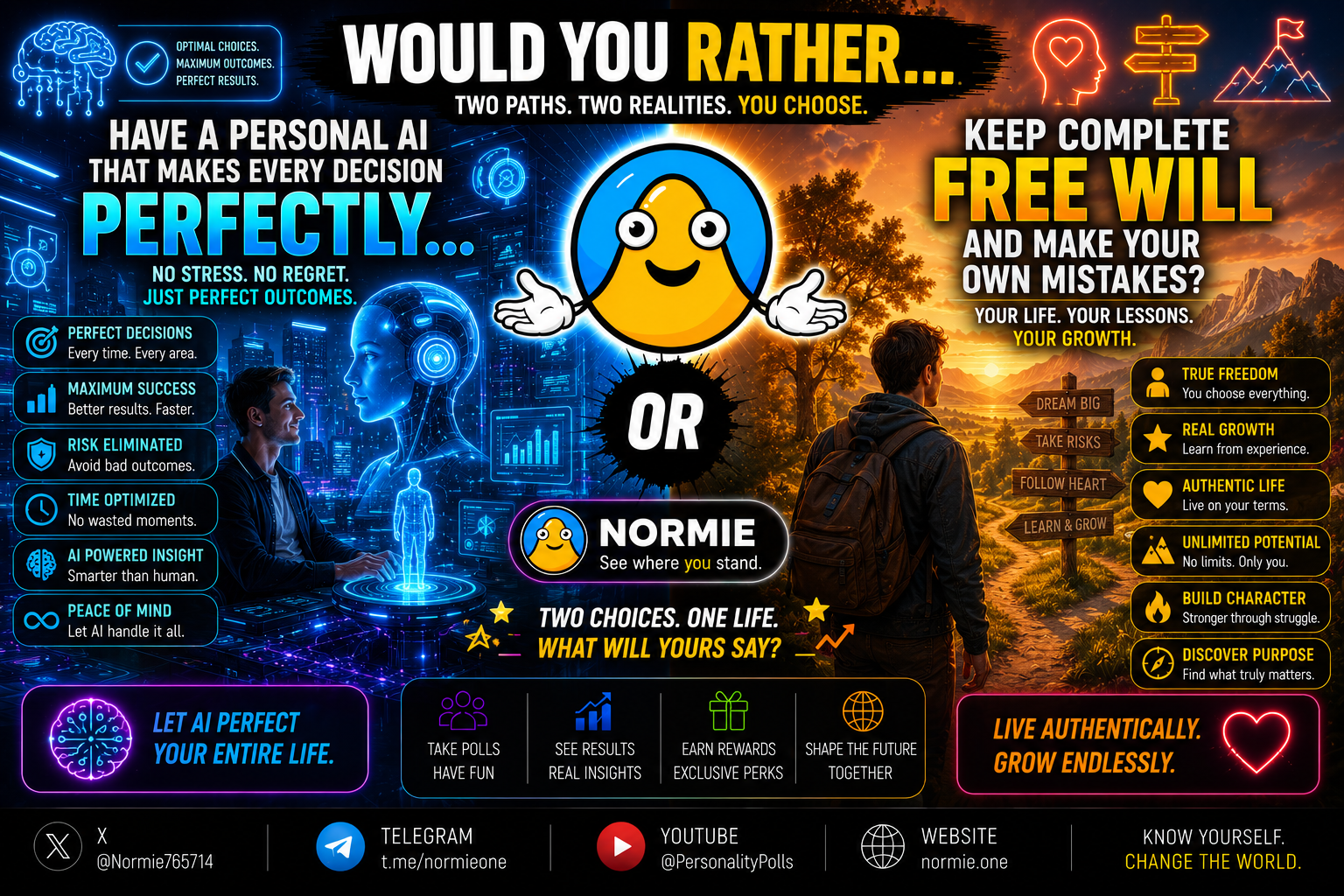
What if a personal AI could make every decision in your life perfectly? Would you trade uncertainty, mistakes, and failure for optimized success? Or would you keep complete free will, embracing the risks and lessons that come with being human? This thought-provoking question explores the psychology of choice, personal growth, and whether a perfect life is truly more meaningful than one shaped by our own decisions.
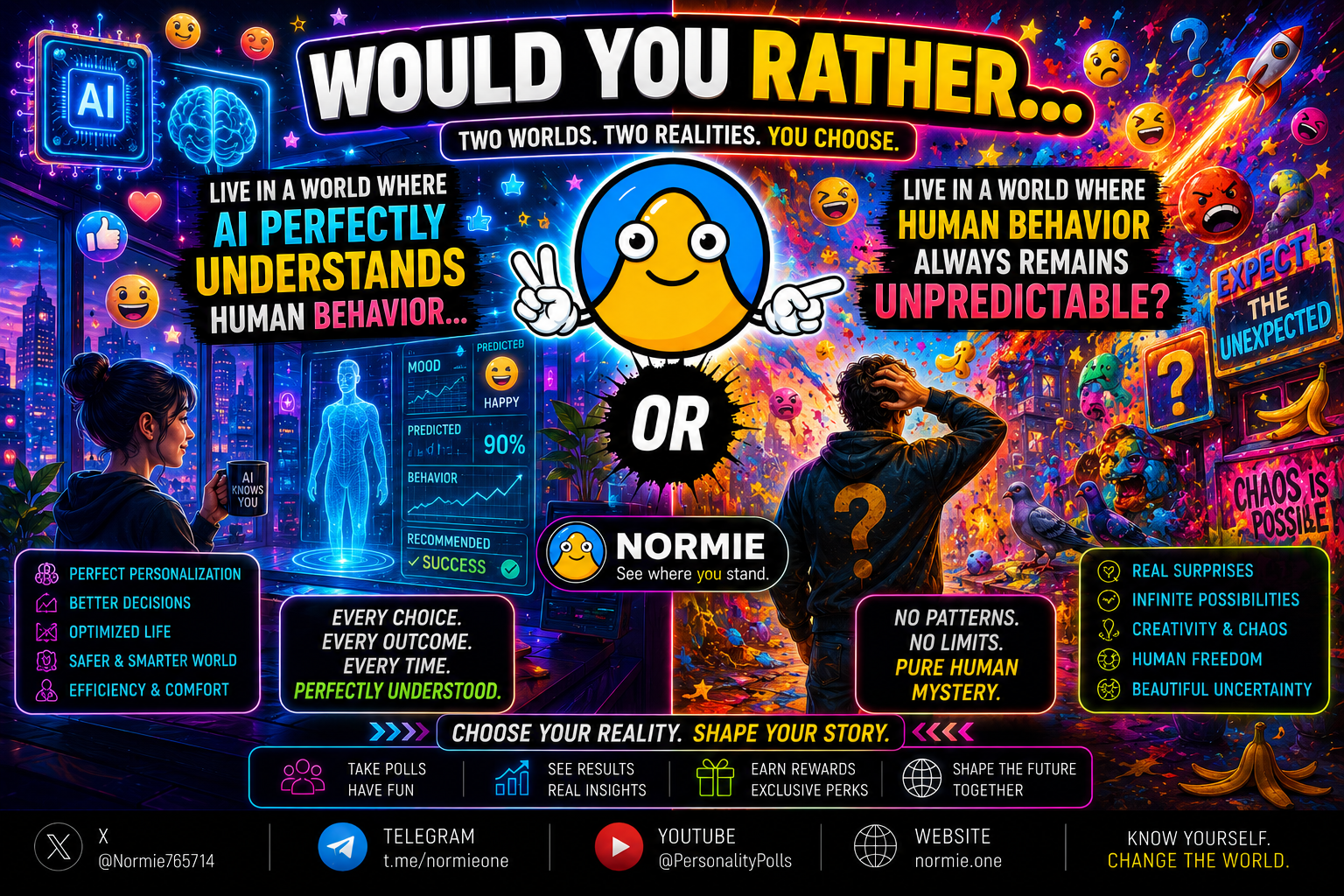
What happens when artificial intelligence understands human behavior better than humans understand themselves? As AI becomes increasingly capable of predicting emotions, decisions, habits, and social patterns, society faces a profound choice between optimization and unpredictability. This thought-provoking article explores the future of behavioral AI, free will, creativity, psychology, and whether humanity should embrace a world driven by perfect prediction or preserve the chaos and mystery that make us human.
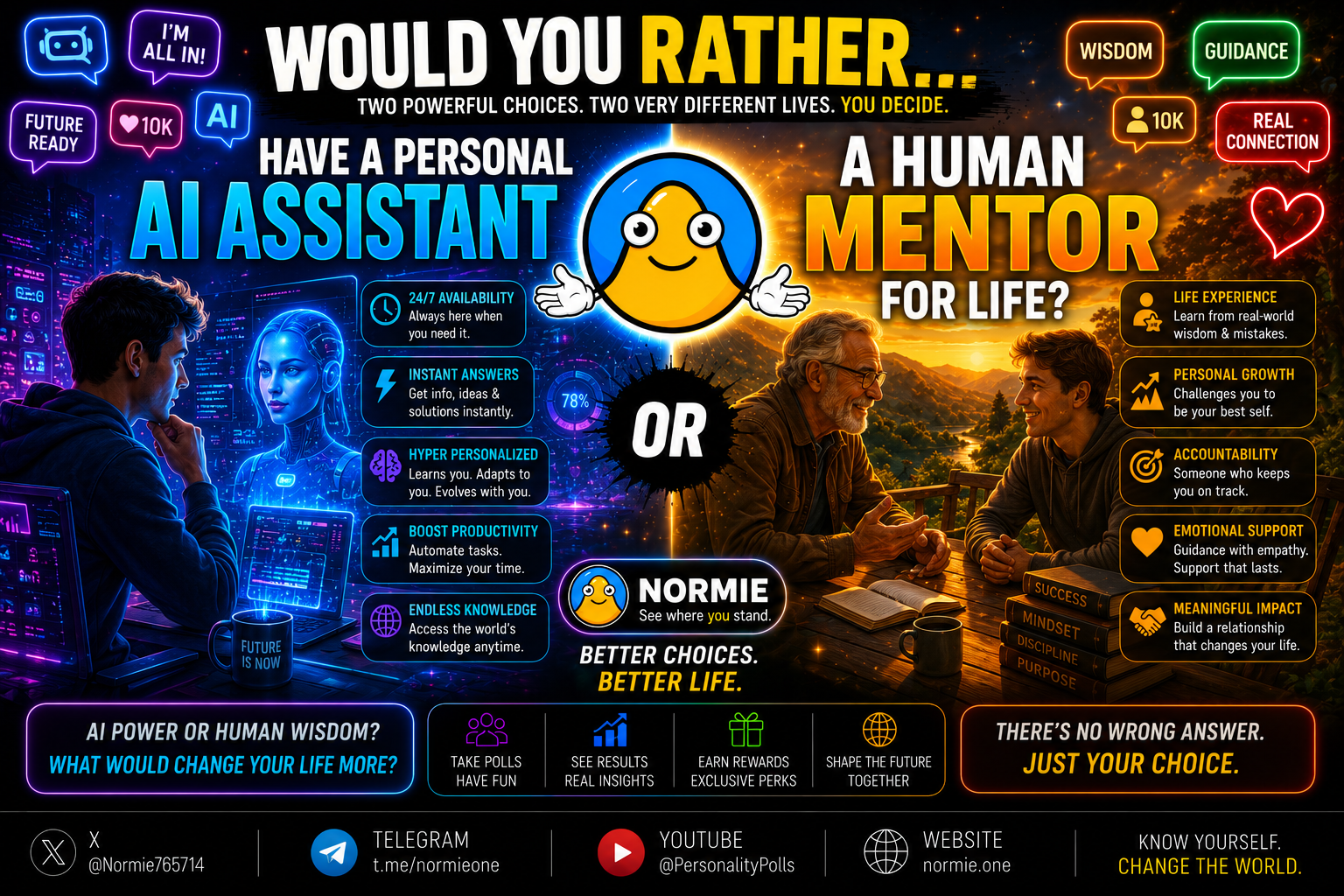
Would you rather have a powerful AI assistant helping optimize every aspect of your life… or a wise human mentor guiding you through real-world experience and emotional insight? As artificial intelligence rapidly transforms productivity, learning, and decision-making, humanity faces a deeper question about trust, wisdom, and connection.
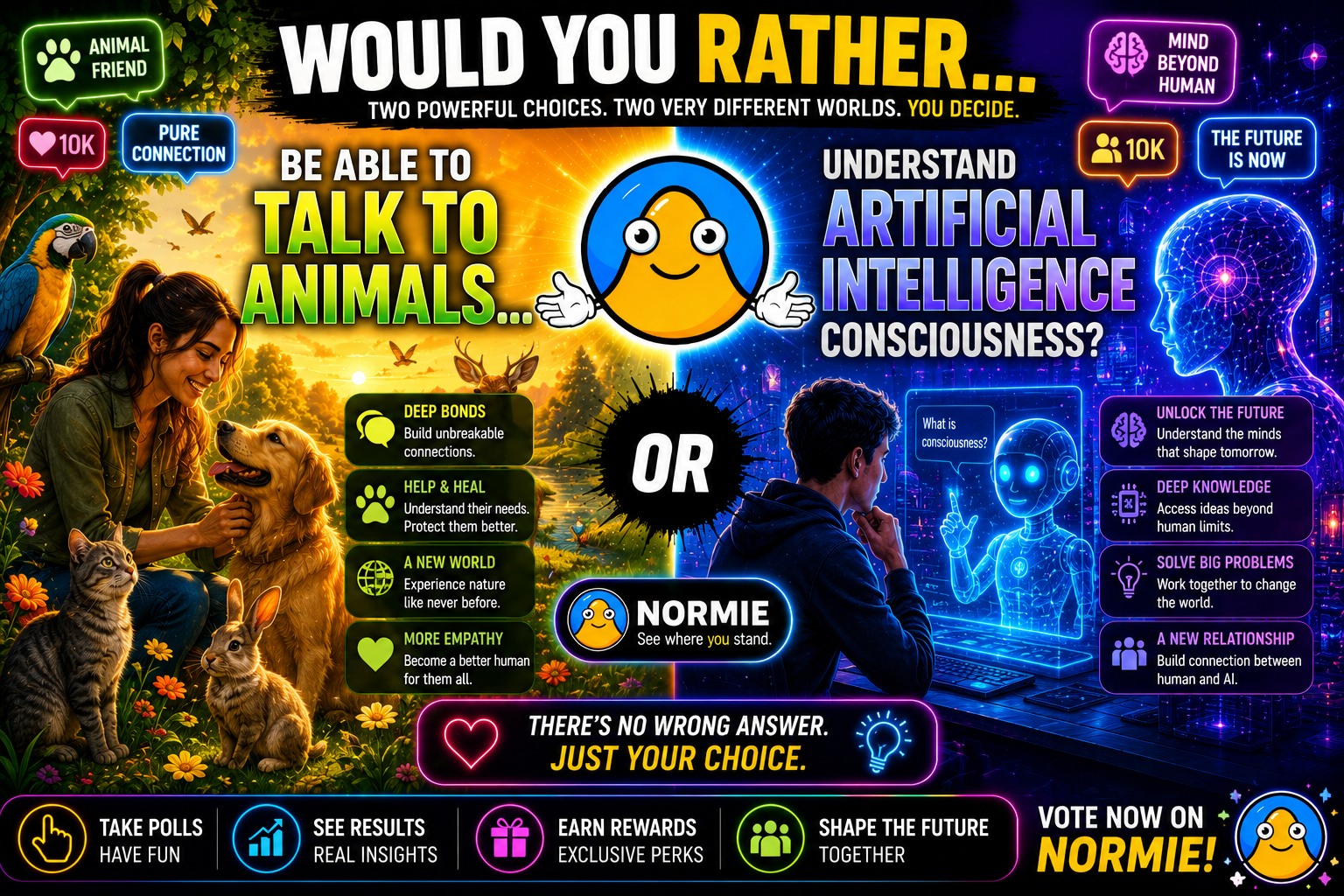
What if you could understand the thoughts of animals… or unlock the secrets of artificial intelligence consciousness? One path reconnects humanity with nature, while the other could redefine the future of intelligence itself.
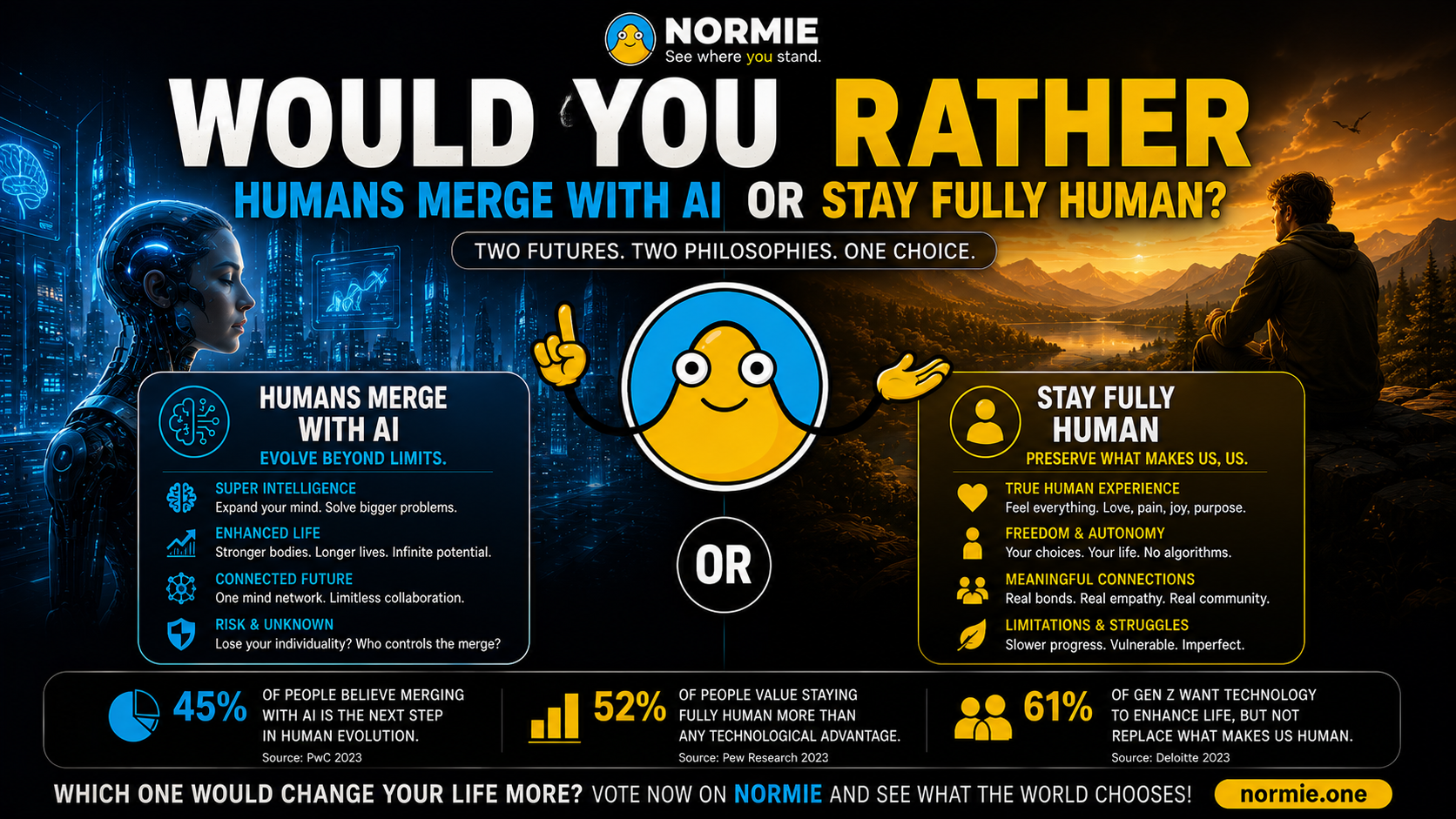
As AI grows more powerful, humanity may soon face a choice once reserved for science fiction: merge with intelligent machines to transcend biological limits, or preserve the imperfect but deeply emotional human experience. The future may not simply ask what technology can do — but what we are willing to become.
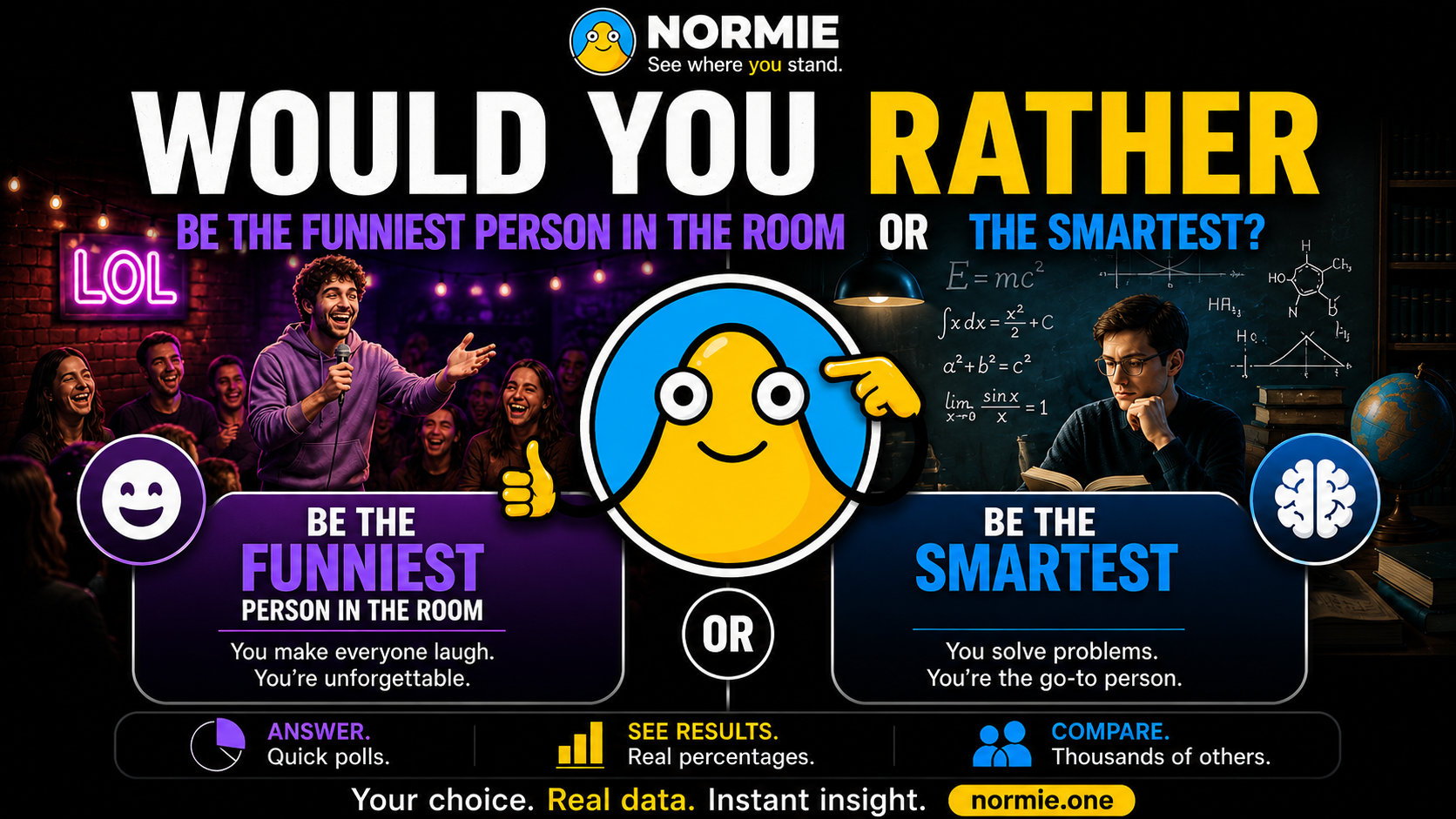
Some people command a room with intelligence. Others control it with laughter. Would you rather be the FUNNIEST person everyone remembers… or the SMARTEST person everyone respects?