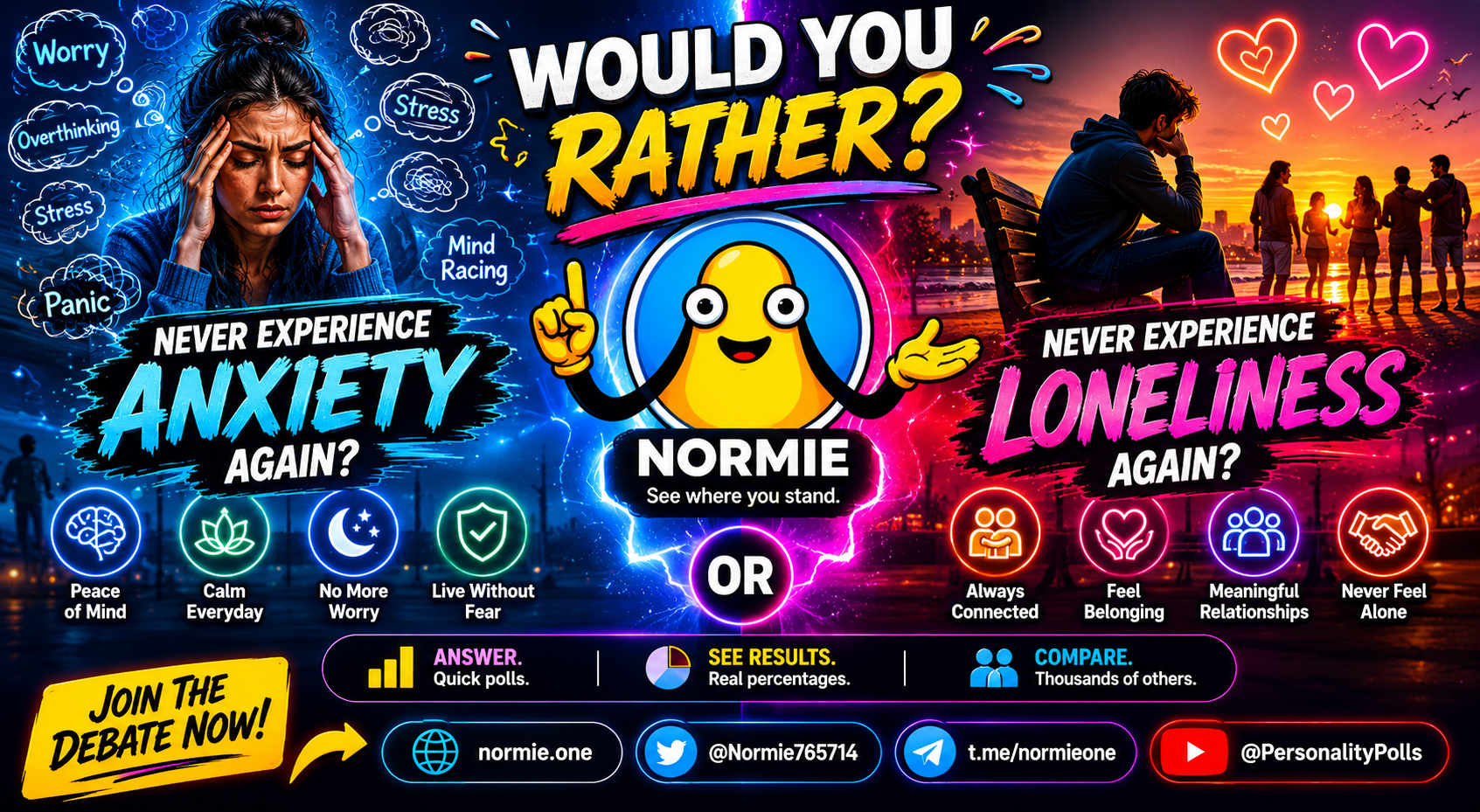
Would You Rather: Never Experience Anxiety Again… or Never Experience Loneliness Again?
Mental health affects every aspect of our lives—from our relationships and careers to our physical health and overall happiness. During Mental Health Awareness Month, millions of people around the world are encouraged to have open conversations about mental wellness, reduce stigma, and connect others with the support they need.
One thought-provoking question highlights two of the most common emotional struggles people face:
Would You Rather...
Never Experience Anxiety Again?
OR
Never Experience Loneliness Again?
At first glance, the answer may seem obvious. But when we examine these experiences more closely, we discover that both anxiety and loneliness can profoundly shape our lives in very different ways.
Understanding Anxiety
Anxiety is one of the most common mental health challenges worldwide.
While occasional anxiety is a normal part of life, chronic anxiety can become overwhelming. It may show up as:
Constant worrying
Racing thoughts
Panic attacks
Difficulty sleeping
Physical tension
Fear of future events
Difficulty concentrating
Avoidance behaviors
Many people describe anxiety as feeling trapped inside their own minds. The brain becomes focused on potential threats, worst-case scenarios, and imagined dangers that may never happen.
Living without anxiety could mean:
Greater peace of mind
More confidence
Better sleep
Reduced stress
Improved focus
More willingness to take risks
Increased enjoyment of daily life
For someone struggling with chronic anxiety, the possibility of never experiencing it again can feel incredibly appealing.
Understanding Loneliness
Loneliness is often misunderstood.
It is possible to be surrounded by people and still feel lonely.
Loneliness is not simply the absence of people. It is the absence of meaningful connection.
It can involve:
Feeling misunderstood
Lack of close relationships
Social isolation
Emotional disconnection
Feeling unseen or unheard
A sense of not belonging
Research has shown that chronic loneliness can have serious effects on both mental and physical health.
Some studies suggest prolonged loneliness may be associated with:
Depression
Increased stress
Sleep problems
Reduced immune function
Higher risk of chronic disease
Lower life satisfaction
Humans are social creatures. We are wired for connection.
The desire to belong may be one of our most fundamental needs.
Anxiety and Loneliness Often Feed Each Other
One reason this question is so challenging is that anxiety and loneliness frequently overlap.
Anxiety can cause people to withdraw socially.
They may avoid gatherings, conversations, dating, networking opportunities, or new experiences.
At the same time, loneliness can increase anxiety.
Without supportive relationships, people often have fewer emotional outlets and less reassurance during difficult times.
This creates a cycle:
Anxiety → Isolation → Loneliness → More Anxiety
Breaking that cycle is often a key goal of mental wellness.
What Psychology Says
Psychologists often view anxiety as a fear-based response to uncertainty.
Loneliness, however, is often viewed as a connection-based challenge.
One asks:
"What if something bad happens?"
The other asks:
"Does anyone truly understand me?"
Both are deeply human questions.
Neither is a sign of weakness.
In fact, both experiences can teach important lessons about ourselves, our needs, and our relationships.
The Case for Eliminating Anxiety
Those who choose anxiety might value:
Peace of mind
Emotional stability
Confidence
Courage
Freedom from worry
Without anxiety, life might feel lighter.
People may take more chances, pursue bigger goals, and spend less time trapped in negative thought loops.
Many would argue that anxiety is one of the greatest barriers to living fully.
The Case for Eliminating Loneliness
Those who choose loneliness might value:
Belonging
Connection
Love
Friendship
Community
Meaningful relationships often provide purpose and resilience during life's challenges.
Knowing you will never feel alone again could mean always feeling supported, understood, and connected to others.
For many people, relationships are what make life meaningful.
Mental Health Awareness Month: More Good Days, Together
Mental Health Awareness Month serves as a reminder that no one has to struggle alone.
The goals include:
Reducing mental health stigma
Encouraging conversations
Increasing access to resources
Promoting emotional wellness
Supporting individuals facing challenges
Mental health is not just about treating illness.
It is about creating more good days.
It is about building healthier communities, stronger relationships, and greater self-awareness.
Whether someone struggles with anxiety, loneliness, depression, stress, or burnout, support is available.
Tips for Managing Anxiety
Practice mindfulness and meditation
Exercise regularly
Improve sleep habits
Limit excessive news and social media
Focus on what you can control
Seek professional support when needed
Practice deep breathing techniques
Tips for Reducing Loneliness
Reach out to friends and family
Join clubs or communities
Volunteer
Participate in group activities
Spend time in nature
Seek support groups
Prioritize meaningful conversations
Small connections can have a powerful impact.
The Bigger Question
Perhaps the most interesting aspect of this debate is what our answer reveals about our priorities.
Do we value inner peace above all else?
Or do we value human connection?
Would we rather eliminate fear?
Or eliminate isolation?
There is no universally correct answer.
But our choice can reveal something profound about our emotional needs and our view of what makes life meaningful.
Join the Conversation at Normie
Normie uses engaging "Would You Rather?" questions to explore human behavior, psychology, personality, and decision-making.
Vote on this question and compare your answer with others:
Would You Rather...
🧠 Never Experience Anxiety Again?
OR
❤️ Never Experience Loneliness Again?
Explore more personality polls and behavioral insights at:
Final Thought
Anxiety challenges our sense of safety.
Loneliness challenges our sense of belonging.
Both are deeply human experiences.
And perhaps the path to mental wellness isn't eliminating one or the other entirely—but learning how to navigate both with resilience, self-awareness, and connection.