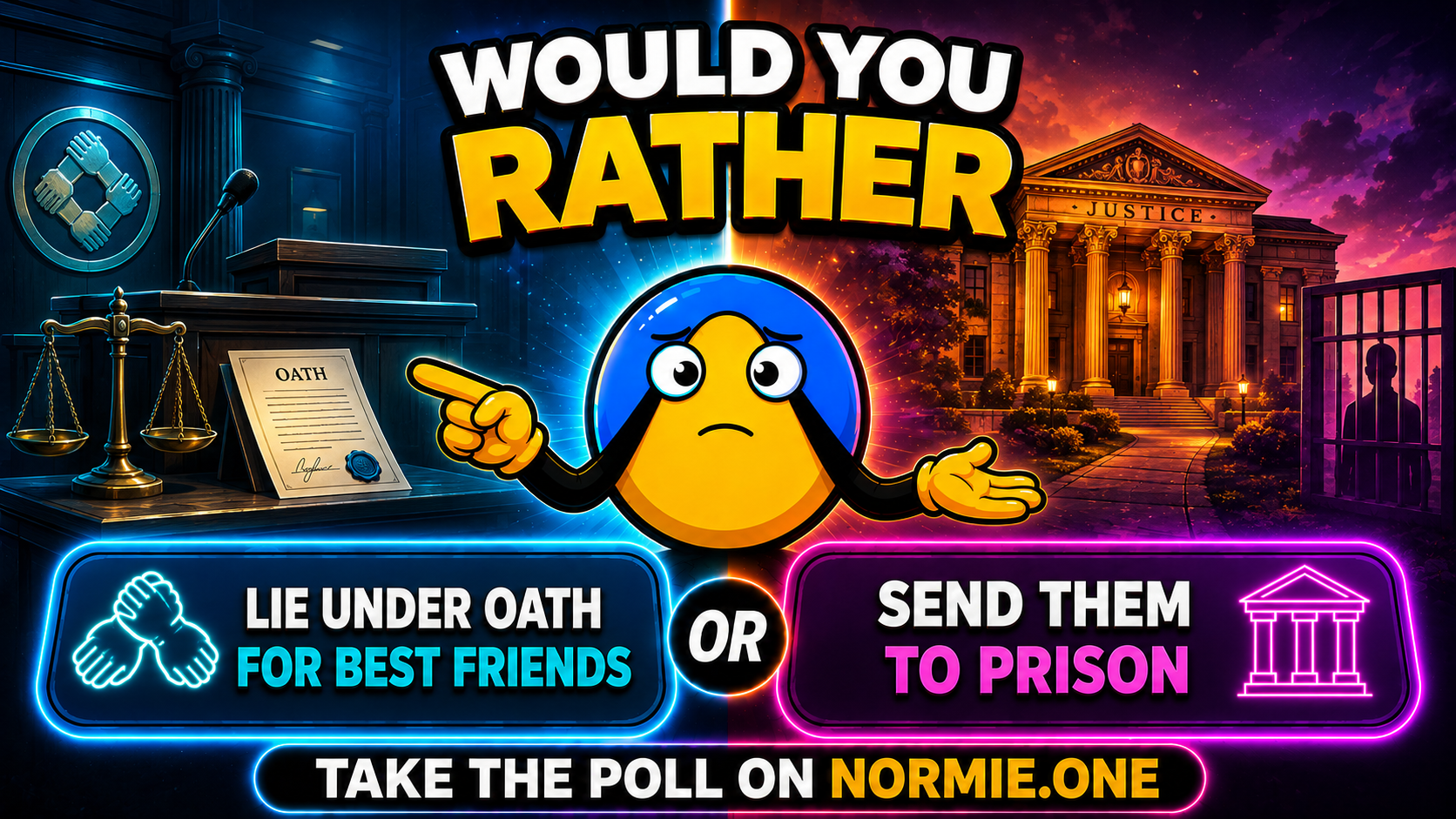
Would You Rather… Lie Under Oath for Best Friends OR Send Them to Prison?
“Loyalty is not proven by helping someone escape every consequence. It is proven by caring enough to want better from them.”
Few questions put friendship under more pressure than this one.
Imagine someone you have known for years—a person who stood beside you through difficult moments, celebrated your wins, knew your family, and has become part of your personal history—is facing prison. You know the truth could hurt them. You also know that lying under oath could put your own freedom, credibility, and values on the line.
Do you protect your friend at any cost? Or do you tell the truth, even if it leads to consequences that may change their life?
It is an uncomfortable choice because both answers can come from love.

The Case for Loyalty
The instinct to protect a best friend is powerful. Friendship is built on trust, shared experience, and the belief that someone will not abandon you when life gets ugly. In the worst moments, we want to believe the people closest to us will stand beside us—not step away to protect their own comfort.
Choosing to lie may come from a belief that the system is too harsh, that the punishment does not fit the wrongdoing, or that one mistake should not erase an entire person’s future. It may reflect the feeling that a friend deserves another chance, especially if they have shown real remorse.
But there is a hard line between standing by someone and helping them avoid responsibility.
A lie told in court does not simply disappear after the moment passes. It can harm innocent people, distort justice, and place the person lying at risk as well. It can also keep a friend trapped in the very behavior that brought them there.
The Case for Truth
Sending a friend to prison sounds cold on the surface. It can feel like betrayal, especially when you know the personal cost of your testimony.
But truth can also be an act of moral courage.
Real friendship is not blind approval. It is the willingness to tell someone when they are wrong, to set boundaries when their choices are destructive, and to refuse to become part of a lie that may create more damage.
There is a difference between supporting a friend through accountability and protecting them from accountability. You can care about their future, help them find legal support, show up for their family, and stand beside them emotionally—without changing the truth.
In some cases, telling the truth may be the only way a person begins to confront what they have done and eventually rebuild their life on something more solid.
The Questions Beneath the Question
This dilemma also depends on facts we are not given.
What did the friend do? Was anyone hurt? Are they taking responsibility? Is the legal system acting fairly? Are you the only witness? Could telling the truth prevent future harm?
The answer may feel very different if the friend made a nonviolent mistake than if their actions seriously harmed someone else. Loyalty to one person matters, but so does responsibility to the people affected by their choices.
That is why this is not really a question about whether friendship matters. It is a question about what kind of friendship we believe in.
Do we believe loyalty means never turning away? Or do we believe the deepest form of loyalty includes honesty—even when honesty is painful?
What Your Choice May Reveal
Choosing lie under oath may suggest that loyalty, protection, forgiveness, and personal bonds carry enormous weight for you. You may believe that people are more than their worst moment and deserve someone in their corner.
Choosing send them to prison may suggest that truth, accountability, fairness, and the wider consequences of an action guide your decisions. You may believe that love should never require you to abandon your principles.
There may be no emotionally easy answer. But the question reminds us that the strongest relationships should make us more honest, more responsible, and more capable of facing reality—not less.
Would You Rather… lie under oath for best friends OR send them to prison?
Take the poll on Normie, make your choice, and join the conversation about where loyalty should end and accountability should begin.