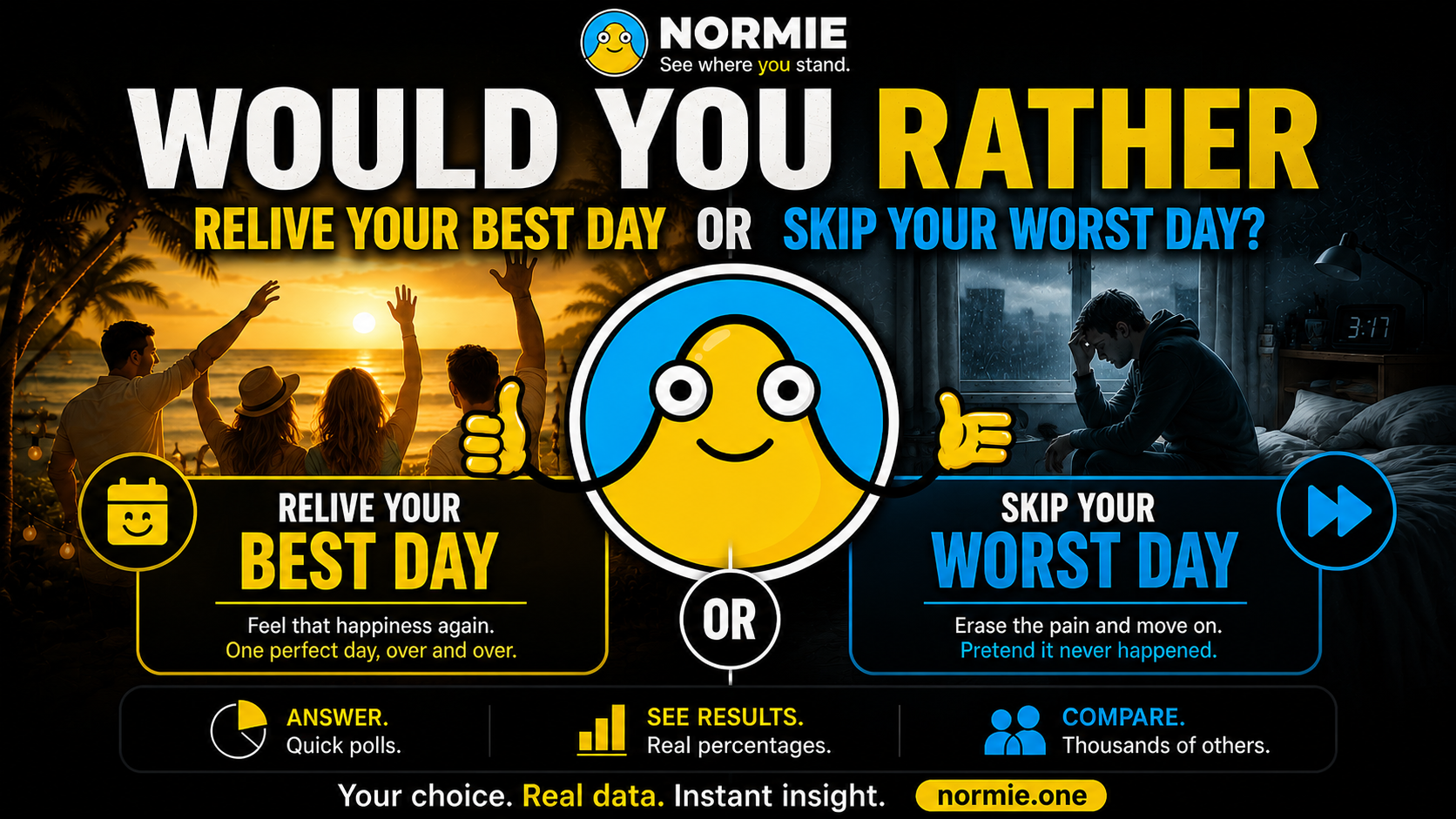
Would You Rather RELIVE Your Best Day… or SKIP Your Worst Day?
Life is often defined less by the years we live and more by the moments that shape us.
One unforgettable day can become a permanent source of joy, meaning, confidence, or nostalgia. One terrible day can leave emotional scars that echo for decades. And if given the choice, many people would instantly know their answer:
Would You Rather…
RELIVE your best day…
OR
SKIP your worst day?
At first, it sounds like a fun psychological thought experiment. But beneath the surface, this question touches memory, trauma, gratitude, regret, identity, resilience, and even the way the human brain is wired to process emotion.
The answer reveals far more about a person than they may realize.
The Psychology Behind the Question
Humans naturally remember emotional extremes.
Psychologists call this the “peak-end rule” — the idea that people judge experiences largely based on their most emotionally intense moments and how those experiences ended.
In other words:
Your happiest moments often define your emotional identity.
Your worst moments often define your emotional survival story.
This is why a single day can permanently alter someone's outlook on life.
For some people, the best day represents:
love
achievement
connection
purpose
freedom
meaning
For others, the worst day represents:
heartbreak
failure
betrayal
loss
fear
humiliation
And strangely enough, both can become equally powerful teachers.
The People Who Choose to RELIVE Their Best Day
People who choose to relive their best day are often driven by emotion, nostalgia, gratitude, or longing.
Maybe it was:
the birth of a child
falling in love
winning a championship
a perfect summer vacation
a wedding day
a life-changing breakthrough
a moment where everything felt aligned
These individuals are often saying:
“There was a moment where life felt completely real… and I want to feel that again.”
This choice reflects:
appreciation of beauty
emotional attachment
optimism
sentimentality
a desire to reconnect with meaning
But there’s another layer.
Sometimes people choose the best day because they feel disconnected from happiness in the present. Reliving joy becomes a form of emotional escape.
Nostalgia itself is fascinating because studies show it can actually reduce stress, increase optimism, and strengthen feelings of belonging. The brain often romanticizes positive memories, turning them into emotional anchors during difficult times.
The danger?
Living too much in the past can slowly prevent someone from creating new meaningful experiences.
The People Who Choose to SKIP Their Worst Day
Others immediately choose to erase the pain.
No hesitation.
No debate.
They would gladly remove:
grief
trauma
embarrassment
illness
loss
addiction
abuse
disaster
heartbreak
And honestly, who wouldn’t want to avoid suffering?
But this answer reveals something deeper too.
People who choose to skip their worst day are often prioritizing:
emotional protection
healing
survival
peace of mind
psychological relief
Some painful days leave permanent marks.
A divorce.
A funeral.
A betrayal.
A diagnosis.
A financial collapse.
An accident.
A panic attack.
A public humiliation.
These moments can divide life into:
“before”
and “after.”
Yet here’s the paradox:
Many people later realize their worst day indirectly led to:
personal growth
strength
empathy
wisdom
reinvention
spirituality
resilience
The worst experiences often become the beginning of transformation.
As philosopher Friedrich Nietzsche famously said:
“What does not kill me makes me stronger.”
Not always.
But sometimes pain becomes the catalyst for evolution.
The Memory Paradox
Here’s what makes this question so psychologically interesting:
If you erase your worst day… do you also erase the lessons that came from it?
And if you relive your best day… would it still feel magical the second time?
Human emotions are deeply tied to contrast.
Without pain:
joy loses intensity.
Without struggle:
success feels less meaningful.
Without loss:
love can become invisible.
Our memories are not isolated moments. They are interconnected emotional systems that shape personality and identity.
The best and worst days often define each other.
Why This Question Goes Viral
Questions like this explode online because they trigger:
emotional reflection
storytelling
identity projection
social comparison
empathy
curiosity
Everyone instantly starts searching their own memory bank.
“What WAS my best day?”
“What WAS my worst?”
And in many cases, people discover something surprising:
the same event can contain both joy and pain simultaneously.
A championship won after years of sacrifice.
A relationship that began beautifully but ended painfully.
A major risk that led to growth through failure.
Life is emotionally complicated.
That’s why these questions resonate so deeply.
The Hidden Truth About Happiness
Many people spend years chasing a “best day” mentality:
the perfect relationship
the perfect career
the perfect trip
the perfect success
But psychology increasingly suggests lasting happiness comes less from peak moments and more from:
meaning
relationships
purpose
health
growth
contribution
presence
The happiest people are not those who avoid pain entirely.
They are often the people who learned how to integrate both joy and suffering into a meaningful life story.
A More Powerful Question
Maybe the real question isn’t:
Would you rather relive your best day or skip your worst?
Maybe the real question is:
“What kind of life are you building RIGHT NOW?”
Because one day, today itself may become:
someone’s favorite memory
or someone’s greatest regret
And most people don’t realize it while they’re living it.
Final Thought
Your best day shows you what’s possible.
Your worst day shows you what you can survive.
Both contain important truths about who you are.
And maybe the goal of life isn’t to endlessly replay happiness or erase suffering completely…
Maybe the goal is learning how to turn every experience — good or bad — into wisdom, growth, connection, and meaning.
Would You Rather…
RELIVE your best day…
OR
SKIP your worst day?
Vote now on Normie — the psychology-powered SocialFi platform exploring human behavior, emotion, personality, and the choices that define us.
Vote now and compare your answer with thousands of others on:
Join the community:
X / Twitter @Normie765714
YouTube @PersonalityPolls